
Live Football Betting Strategies and In-Play Tactics
 Available in US

Something fundamental shifts when you bet on a match already in progress. The comfortable distance of pre-match analysis disappears, replaced by immediate feedback and constant decision points. Odds move with every attack, every substitution, every shift in momentum. What felt like a considered prediction before kick-off becomes a series of real-time judgments where hesitation costs money and impulsiveness costs more. In-play betting has transformed how millions engage with football, but it has also created new ways to lose money faster than traditional betting ever allowed.
The appeal is obvious and genuine. Watching a match while holding a position creates engagement that pre-match betting cannot match. The ability to react to what you see, to back a team showing dominance or lay one clearly struggling, feels like skill expression in ways that pre-match predictions do not. And sometimes it is. Bettors who read matches well and execute quickly can find value that vanishes within seconds of becoming apparent. The problem is that most in-play bettors are not finding value. They are reacting emotionally to recent events, chasing positions, and paying the price in widened margins and poor timing.
This guide examines in-play football betting seriously, covering the mechanics of how live odds work, the markets available during matches, strategic approaches that can generate edge, and the psychological traps that destroy bankrolls. The goal is not to encourage more in-play betting but to ensure that those who choose this form of wagering do so with realistic understanding of what they face.
Live Odds Algorithms & In-Play Calculations
In-play odds represent probability estimates that update continuously as match circumstances change. Understanding what drives these updates helps you recognise when movements reflect genuine information versus algorithmic adjustment, and where human observation might identify value before prices correct.
Bookmakers employ sophisticated systems that process match events in real time and translate them into probability adjustments. A goal changes everything instantly. The scoring team becomes more likely to win, the conceding team less so, and draw probability shifts based on how the new scoreline affects likely final outcomes. These adjustments happen within seconds, often before television broadcasts show the goal to viewers watching on delayed streams.
Between major events, odds drift gradually based on elapsed time. As minutes pass without goals, the probability distribution shifts. A team leading 1-0 becomes increasingly likely to maintain that lead as the remaining time for the trailing team to equalise shrinks. This time decay affects all outcomes but impacts some more than others. Draw probability might increase early in matches as goalless periods accumulate, then decrease once a goal breaks the deadlock.
The algorithms driving these calculations incorporate historical patterns across thousands of matches. They know how often teams leading at various scorelines and time points go on to win, draw, or lose. They adjust for factors like home advantage, relative team strength based on pre-match assessments, and statistical expectations for goal rates in remaining time. What they struggle to incorporate is qualitative information visible only to those watching attentively.
Bookmakers suspend markets during dangerous moments to protect against information asymmetry. When a team attacks and appears likely to score, odds freeze briefly. This prevents bettors with faster information feeds from exploiting the lag between events occurring and prices updating. Markets typically reopen within seconds once the immediate threat passes, though this can frustrate bettors trying to execute during flowing play.
Latency differences create opportunities and risks depending on your position. Watching a match live in the stadium provides information seconds before television viewers see it, and significantly before those relying on text updates or statistics feeds. Professional in-play bettors sometimes position themselves at venues or access rapid data feeds specifically to exploit these timing advantages. Recreational bettors watching on standard television typically cannot compete on speed and should not try to.
The margins on in-play markets generally exceed pre-match equivalents. Bookmakers widen their edge to compensate for the additional risk of faster-moving markets and potential information disadvantages. A match result market that ran at 3 percent margin pre-match might operate at 5 or 6 percent in-play. This increased cost should factor into your assessment of whether in-play betting makes sense for your approach.
Key Markets Available During Matches
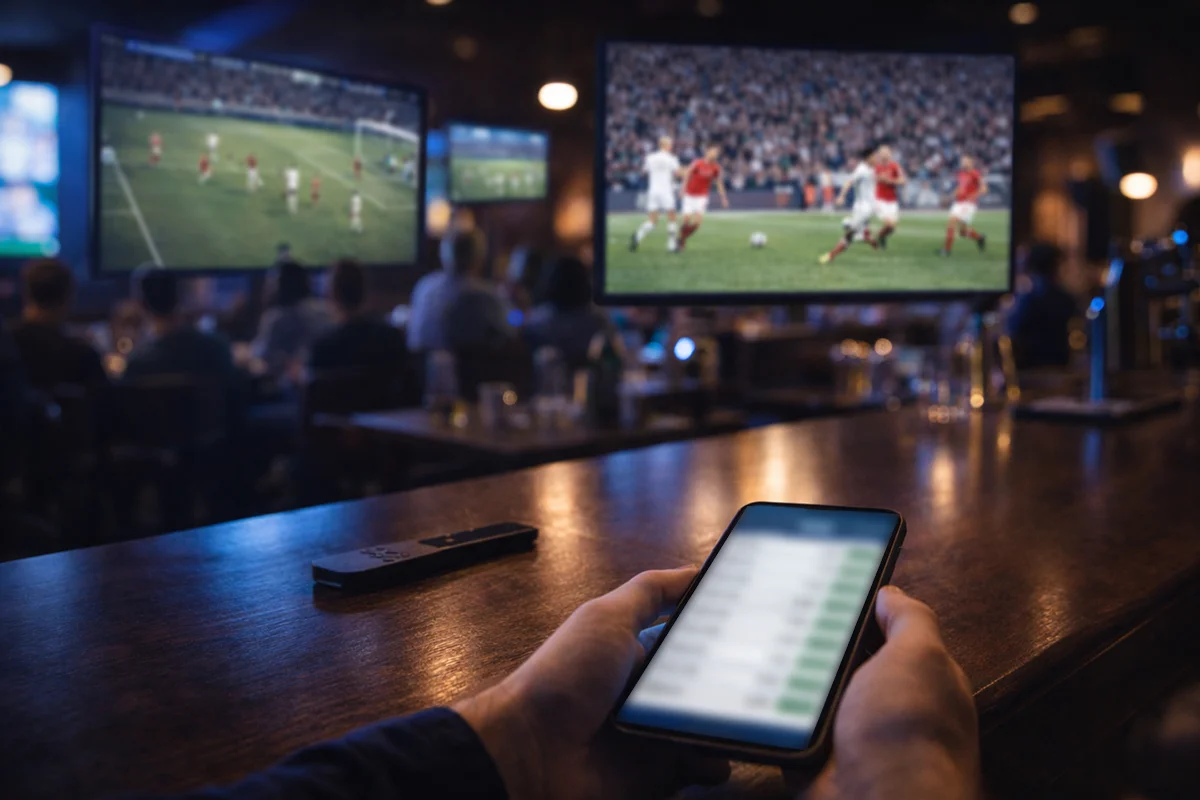
Most pre-match markets remain available in-play with continuously updated odds, though some work better than others for live betting. Understanding which markets suit real-time wagering helps focus attention where opportunities genuinely exist.
Match result remains the core in-play market, with odds shifting constantly based on current score, time elapsed, and match flow. The three outcomes of home win, draw, and away win maintain their pre-match structure but with probability assessments that can change dramatically within minutes. A goal transforms the entire market instantly, while sustained pressure without scoring produces more gradual movement.
Next goal betting offers a pure focus on immediate events rather than final outcomes. You bet on which team scores next, with a draw option covering matches that produce no further goals. This market resets after each goal, creating multiple betting opportunities within a single match. The rapid turnover appeals to those who enjoy constant action, though it also accelerates potential losses for undisciplined bettors.
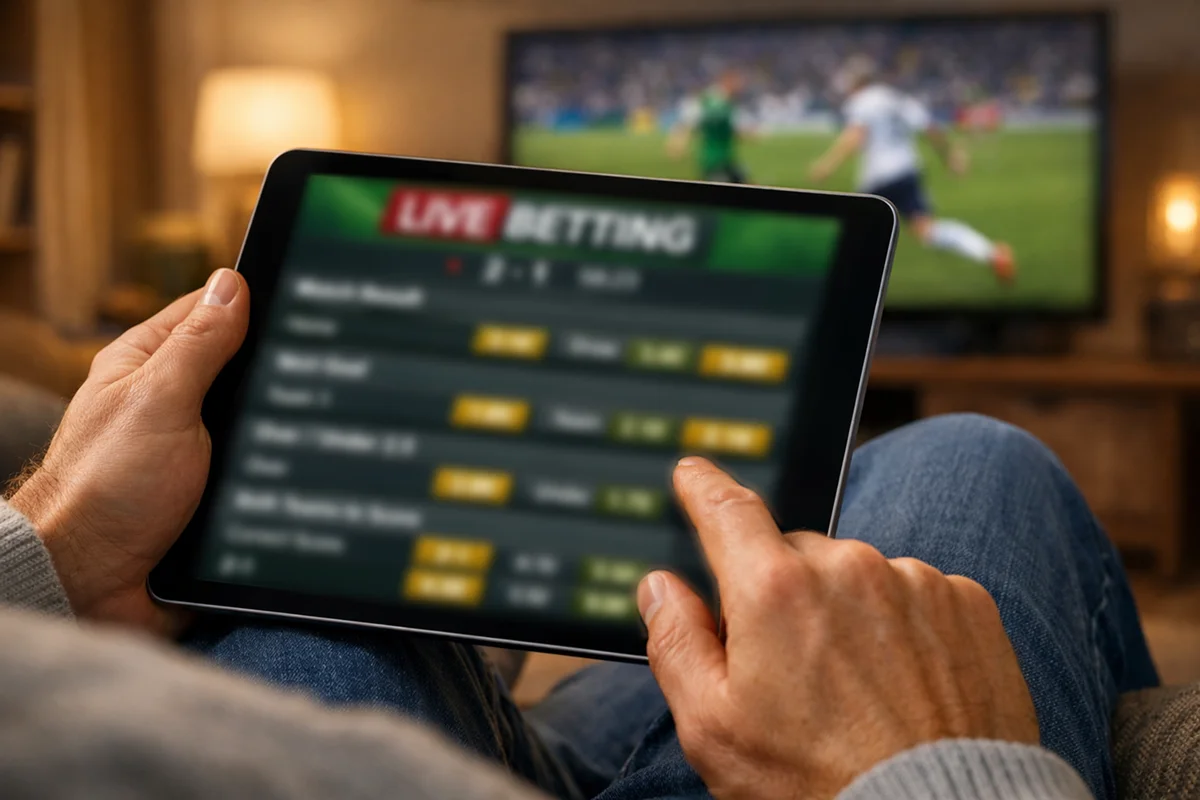
Over and under goals markets update based on current totals and expected remaining goals. A match sitting at 0-0 after sixty minutes will show very different over 2.5 odds than one already at 2-1. These markets let you bet on whether scoring will pick up or remain subdued based on how the match is developing. Late goals can produce dramatic swings in probability, with over lines that seemed dead coming alive in final minutes.
Asian handicaps in-play offer the same structure as pre-match but with lines adjusted for current score. A team that started at minus 0.5 might move to minus 1.5 or plus 0.5 depending on how events unfold. The continuous line adjustment creates more entry points than static markets, allowing bettors to find positions that match their in-play assessment more precisely.
Corners, cards, and other prop markets continue in-play with varying degrees of liquidity and update frequency. These secondary markets often receive less attention from bookmakers, potentially creating inefficiencies for specialists who understand the relevant dynamics. However, wider margins and lower liquidity also mean execution can be difficult and value harder to capture even when identified.
Some bookmakers offer in-play markets specific to match phases. First-half result, second-half betting, and segment-based totals provide ways to focus on particular periods rather than full match outcomes. These can suit analysis that identifies patterns in how teams perform across different match stages. Diversifying your portfolio requires a deep understanding of various football betting markets, from simple match results to complex Asian handicaps.
Strategic Approaches to In-Play Betting
Successful in-play betting requires strategies distinct from pre-match approaches. The speed of decision-making, the different information available, and the altered market dynamics all demand adjusted tactics.
Pre-match preparation remains essential despite the reactive nature of in-play betting. Entering a match with clear views on likely scenarios, key players to watch, and price levels that would represent value positions you to act decisively rather than scrambling to analyse while odds move. The best in-play bettors know what they are looking for before kick-off and execute when conditions match their expectations.
Backing teams that start slowly but typically improve offers one systematic approach. Some teams consistently perform better in second halves than first halves, perhaps due to fitness advantages or tactical adjustments their managers make at the break. If such a team falls behind early, their live odds might overreact to the immediate deficit, creating value for bettors who understand the pattern.
Laying heavy favourites who concede first provides another angle. When a dominant team unexpectedly falls behind, markets often overcorrect, implying comeback probability higher than historical patterns support. The emotional weight of seeing a favourite trailing can push odds to levels that overestimate their recovery chances. Data on how specific teams perform after conceding first goals informs whether this pattern offers genuine value.
Targeting matches where pre-match analysis suggested value that has now improved requires patience and selectivity. Perhaps you liked a team at 2.50 pre-match but felt it was not quite enough to bet. If they fall behind and drift to 4.00, the underlying analysis now suggests clearer value. This approach uses in-play as an opportunity enhancer rather than a standalone strategy, letting adverse match developments create the prices your pre-match work identified as attractive.
Exploiting momentum shifts demands careful observation and quick execution. When a match swings decisively, with one team suddenly dominating possession, creating chances, and appearing likely to score, odds adjust quickly but sometimes not quickly enough. Bettors watching attentively might identify these shifts before algorithms fully incorporate them. The window is narrow and the risk of misreading momentum is real, but genuine informational edge exists for those who see matches accurately.
Avoiding reactionary betting after goals is crucial discipline. Goals create emotional spikes that cloud judgment. The team that just scored feels invincible. The team that conceded feels doomed. These feelings rarely reflect rational probability assessment. Waiting thirty seconds to a minute after goals before considering any action lets the immediate emotional response subside and markets stabilise.
Reading the Match While Betting
The informational advantage available to attentive viewers represents one of the few genuine edges recreational bettors can develop in-play. Algorithms process statistics efficiently but cannot watch the match in any meaningful sense. Human observation captures qualitative factors that numbers miss.
Body language reveals more than most statistics. Players who look tired move differently than fresh ones. Teams that have given up stop making runs, stop pressing, stop caring about second balls. A manager screaming instructions signals adjustment coming. These visual cues inform probability assessments in ways that pass completion rates and expected goals models cannot capture.
Tactical patterns become visible through sustained observation. A team sitting deeper as they protect a lead changes the probable distribution of remaining goals. An attacking substitution signals intent that should affect expectations. A switch from back four to back three alters defensive stability. Recognising these shifts as they happen, rather than inferring them from statistics after the fact, provides timing advantage.
Referee tendencies affect multiple markets. Officials who let matches flow produce different outcomes than those who stop play frequently. Card-happy referees change booking market probabilities. Referees who favour home teams might subtly influence match result expectations. These patterns are hardest to quantify but visible to experienced observers.
Weather impacts that develop during matches create opportunities the pre-match assessment could not anticipate. Rain beginning in the second half changes pitch conditions. Wind affecting one direction more than the other might make the team now shooting toward the problematic end less likely to score. These dynamic factors require real-time observation to incorporate.
Concentration and fatigue affect your own judgment as matches progress. The quality of your observation degrades over ninety minutes, particularly if you have been watching and betting across multiple matches. Recognising when your own assessment has become unreliable, perhaps late in matches or after extended periods of engagement, helps avoid the worst decisions that exhausted analysis produces.

Cash Out Decisions and Timing
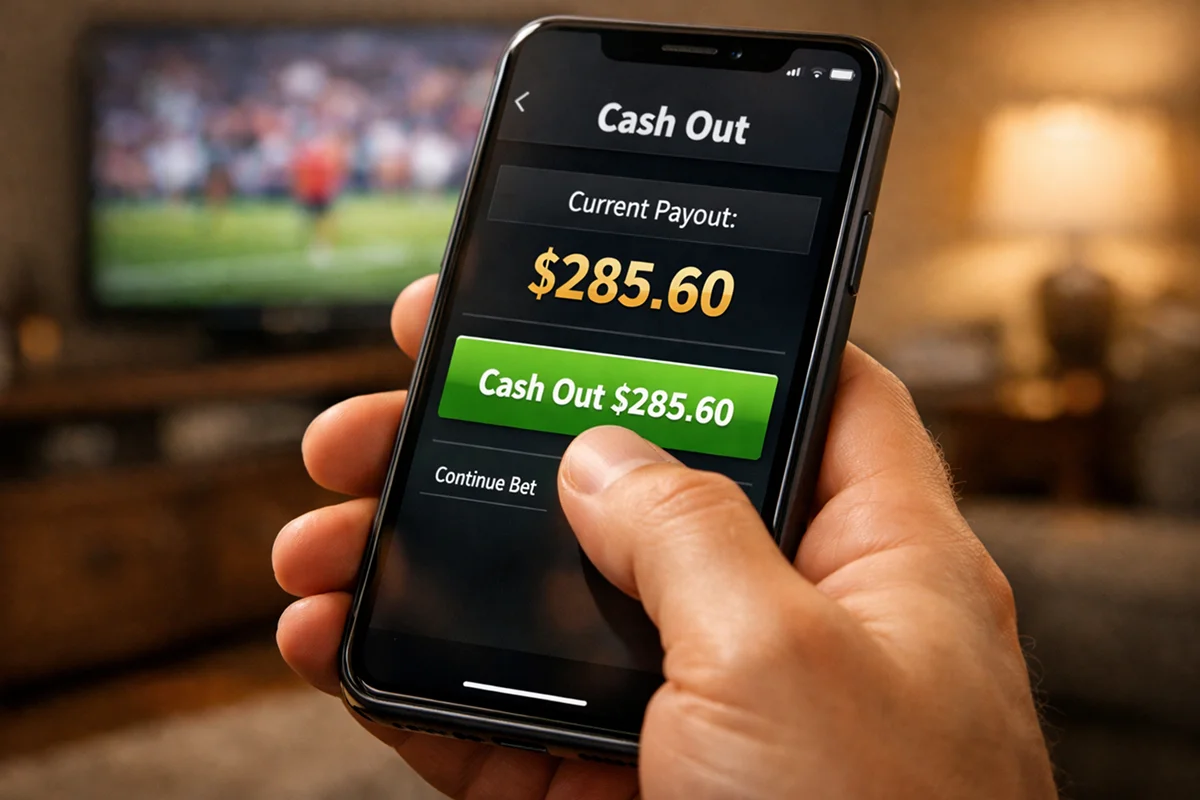
Cash out functionality allows settling bets before final outcomes, locking in profit or limiting losses based on how circumstances have developed. Using this feature well requires understanding what you give up and what you gain.
The cash out value offered is not the fair value of your position. Bookmakers apply margin to cash out quotes just as they do to regular odds. You typically receive slightly less than mathematical expectation for winning positions and pay slightly more to exit losing positions than true probability would suggest. This spread represents the cost of early settlement convenience.
Emotional cash out decisions usually prove regressive. The urge to lock in profit when your bet is winning often stems from fear of losing that profit rather than rational assessment that probability has shifted against you. Similarly, the desire to cut losses when behind sometimes reflects unwillingness to accept variance rather than genuine belief the bet has become worse than current cash out implies.
Strategic cash out makes sense in specific circumstances. If your original analysis has been invalidated by match events, exiting makes sense regardless of current profit or loss. If new information substantially changes probability in ways the cash out quote does not fully reflect, acting on that information is rational. If you need to manage overall exposure across a portfolio of bets, cash out provides flexibility.
Partial cash out, where available, offers middle ground. Taking some profit while letting the remainder run captures guaranteed return while maintaining upside. This can suit situations where you want to reduce risk without completely exiting a position you still believe has value.
The discipline to let bets run to conclusion often outperforms frequent cash out usage. Studies of betting behaviour suggest that recreational bettors who cash out regularly underperform those who simply let bets settle. The psychological comfort of locking in results comes at mathematical cost. Unless you have specific reasons to believe your position has deteriorated beyond what cash out prices reflect, holding typically makes more sense than exiting.
Psychological Risks and Required Discipline
In-play betting amplifies psychological pressures that threaten bankrolls. The speed, the constant feedback, the emotional engagement of watching while betting all create conditions where discipline fails more easily than in pre-match contexts.
Chasing losses accelerates dangerously in-play. A bet that loses during a match creates immediate temptation to recover by betting again before the match ends. This urge is particularly strong because the match is right there, continuing, offering apparent opportunities to fix what just went wrong. But bets placed to chase losses rather than capture value almost always make the situation worse.
Overconfidence from early wins produces the opposite problem. A successful in-play bet creates momentum feelings that encourage additional betting with insufficient analysis. The dopamine hit of watching your bet win in real time reinforces behaviour regardless of whether the original decision was sound. Winning encourages more betting, which means more exposure to the house edge.
The pace of in-play betting leaves no time for the reflection that catches poor decisions before they execute. Pre-match, you might sleep on a potential bet, discuss it with fellow bettors, or simply wait until closer to kick-off to see if your view holds. In-play demands immediate decisions. That urgency favours impulsive action over considered analysis.
Staking discipline erodes when you are watching. The emotional engagement of live matches makes it feel like more money should be at stake because it matters more. Rational staking that would govern pre-match betting gets abandoned for in-play positions that feel more significant in the moment. This emotional stake sizing increases variance and accelerates losses.
Setting firm rules before engaging with in-play markets protects against these pressures. Decide maximum stakes, maximum number of bets per match, and circumstances that trigger walking away before the match starts. These predetermined boundaries provide external discipline when internal discipline fails in the heat of live action.
Taking breaks during matches preserves decision quality. Stepping away for five minutes after a significant event, whether a goal, a red card, or a bet settling, creates space for emotional reactions to subside before further decisions. This simple practice prevents many of the worst in-play decisions that occur in immediate reaction to events.
Recognising when in-play betting is not working for you requires honest assessment over meaningful samples. If your in-play results consistently lag your pre-match results, the format may not suit your skills or temperament. There is no shame in acknowledging that live betting is not your strength and focusing energy where it produces better returns.

Making In-Play Betting Work Responsibly
In-play betting will not disappear, and for many bettors it represents the most engaging way to interact with football they love. Making it work means accepting the format for what it is while implementing practices that limit damage and occasionally create genuine value.
Treat in-play as a supplement rather than the core of your betting. Pre-match analysis provides the foundation. In-play opportunities arise when match developments create value your pre-match work identified or when live observation reveals something the market has not yet priced. This subordinate role keeps in-play betting focused rather than chaotic.
Specialise in matches where your observation provides genuine advantage. You cannot watch every match with equal attention. Focusing in-play betting on matches you are actually watching carefully, where your analysis has depth and your observation is attentive, improves decision quality compared to spreading activity across matches you are only half following.
Accept that in-play edges are smaller and harder to find than pre-match opportunities. Markets move quickly, margins are wider, and execution challenges abound. Even skilled in-play bettors often find that their edge per bet is smaller than what they achieve pre-match. This reality should calibrate expectations and stake sizes.
Use in-play betting to enhance entertainment value when value betting opportunities are absent. There is nothing wrong with small-stake in-play bets placed primarily for engagement rather than profit, provided you recognise them as entertainment expense rather than serious wagering. The problems arise when entertainment betting gets confused with value betting and stakes inflate accordingly.
In-play football betting rewards the prepared, the observant, and the disciplined. It punishes the impulsive, the reactive, and the overconfident. Understanding which category you fall into, honestly and without flattering self-assessment, determines whether in-play betting should feature prominently in your approach or remain an occasional indulgence undertaken with appropriate caution.
The technology enabling in-play betting continues to advance. Faster data feeds, more sophisticated algorithms, and expanded market offerings will characterise the coming years. These developments create both opportunity and risk. More markets mean more ways to express genuine insight but also more ways to leak money through undisciplined betting. Faster updates narrow the windows where human observation provides edge but also create moments where algorithms lag perceptible reality.
Streaming integration has transformed the in-play experience. Many bookmakers now offer live video directly within their betting platforms, removing friction between watching and wagering. This convenience serves bookmaker interests by encouraging more betting volume. For bettors, it eliminates excuses for betting blind while also making it easier to bet excessively. The tool is neutral; how you use it determines whether it helps or harms your results.
Record keeping matters even more for in-play betting than for pre-match wagering. The speed and volume of potential decisions makes it easy to lose track of what you have bet and how results accumulate. Maintaining logs of every in-play bet, including the reasoning and match context, supports the kind of reflective learning that distinguishes improving bettors from those who repeat mistakes indefinitely. Without records, you cannot honestly assess whether your in-play betting adds value or simply adds excitement at mathematical cost.
The honest assessment many bettors need to make is whether in-play betting is costing them money relative to a pre-match-only approach. For some, the answer will be yes, and the right response is reduction or elimination of live betting from their routine. For others, in-play may represent a genuine strength worth emphasising. Most fall somewhere between, finding in-play occasionally valuable but frequently costly, suggesting careful moderation rather than either extreme. Finding your own answer requires data, honesty, and willingness to act on what the evidence shows rather than what feels exciting in the moment.
For daily insights and market analysis, return to our reliable football betting site before the weekend fixtures.
