
Football Bookmaker Odds Calculation and Pricing
 Available in US

The numbers staring back at you from a betting slip are not arbitrary. They represent countless hours of analysis, sophisticated mathematical models, and constant adjustment based on market behaviour. Understanding how football bookmakers set odds transforms you from a passive participant into someone who can recognise when prices genuinely offer value and when the house has priced a market so tightly that winning becomes almost impossible. This knowledge will not guarantee profits, but it will certainly prevent the kind of blind betting that enriches bookmakers at your expense.
Most punters treat odds as simple facts, like weather forecasts or train timetables. They appear on screen, you either like them or you do not, and that is the extent of the engagement. But odds are products, carefully manufactured to achieve specific commercial objectives. The people who create them possess skills that most bettors never think about, and they operate within systems designed to ensure the betting company wins regardless of what happens on the pitch. Appreciating this reality is the first step toward betting with genuine awareness rather than hopeful ignorance.
The mechanics of odds compilation have evolved dramatically over the past two decades. Where once a handful of experts relied primarily on their own judgement and relatively simple statistical inputs, today’s major bookmakers deploy teams of analysts armed with algorithmic models processing millions of data points. The industry has professionalised to an extraordinary degree, and the margins for punter error have correspondingly narrowed. This guide examines that machinery in detail, explaining not just what happens but why it matters for anyone placing money on football matches.
Odds Compilers & Sportsbook Risk Management

Every price you see attached to a football market originated with someone making a judgement. In the betting industry, these people are called odds compilers or traders, and their role sits at the heart of how bookmaking actually functions. Without competent compilers, a bookmaker would quickly find itself exposed to ruinous losses. With excellent ones, the business prints money regardless of which team scores the winning goal.
Odds compilers typically combine quantitative skills with deep sport-specific knowledge. The best ones understand football genuinely, not just as a collection of statistics but as a game where context shapes outcomes in ways that numbers alone cannot capture. They know that a team returning from midweek European travel faces different challenges than one enjoying a full week of preparation. They recognise when a manager’s relationship with players has deteriorated to the point where tactical instructions go ignored. They factor in pitch conditions, referee tendencies, weather forecasts, and dozens of other variables that might influence how ninety minutes unfold.
The job begins well before match week. For major leagues, compilers maintain rolling assessments of every team, updating their views after each fixture. These assessments inform what the industry calls tissue prices, the initial odds that reflect the compiler’s best estimate of true probabilities before any betting money enters the equation. A tissue price is essentially a starting point, the compiler’s answer to the question of what odds would be fair if the bookmaker sought no profit margin whatsoever.
From that starting point, the process of building a commercial market begins. The tissue price gets adjusted to incorporate the bookmaker’s margin, then published to attract betting activity. Once live, the price becomes subject to continuous revision based on how much money arrives on each outcome. The compiler’s job shifts from initial assessment to ongoing management, watching flows, interpreting signals, and adjusting positions to keep the book balanced or deliberately unbalanced depending on the firm’s risk appetite.
Different bookmakers structure their trading operations differently. Some maintain large in-house teams covering all major sports extensively. Others rely more heavily on third-party odds feeds, essentially outsourcing much of the initial compilation work while retaining final say over what prices they actually publish. A few premium operators pride themselves on original pricing, viewing their odds as a competitive advantage worth investing in heavily. Most sit somewhere in the middle, combining external inputs with proprietary adjustments tailored to their specific customer base.
The compiler’s toolkit has expanded enormously with technological advancement. Where previous generations worked primarily from newspapers, form guides, and personal observation, today’s compilers have access to comprehensive databases covering decades of results, detailed player-level performance metrics, expected goals models, and real-time injury information. Machine learning algorithms assist with pattern recognition across datasets too large for human processing. Yet the human element remains essential. Machines excel at processing historical patterns but struggle with novel situations, managerial changes, or the kind of qualitative insight that comes only from watching football attentively over many years.
Statistical Modeling and Data Inputs
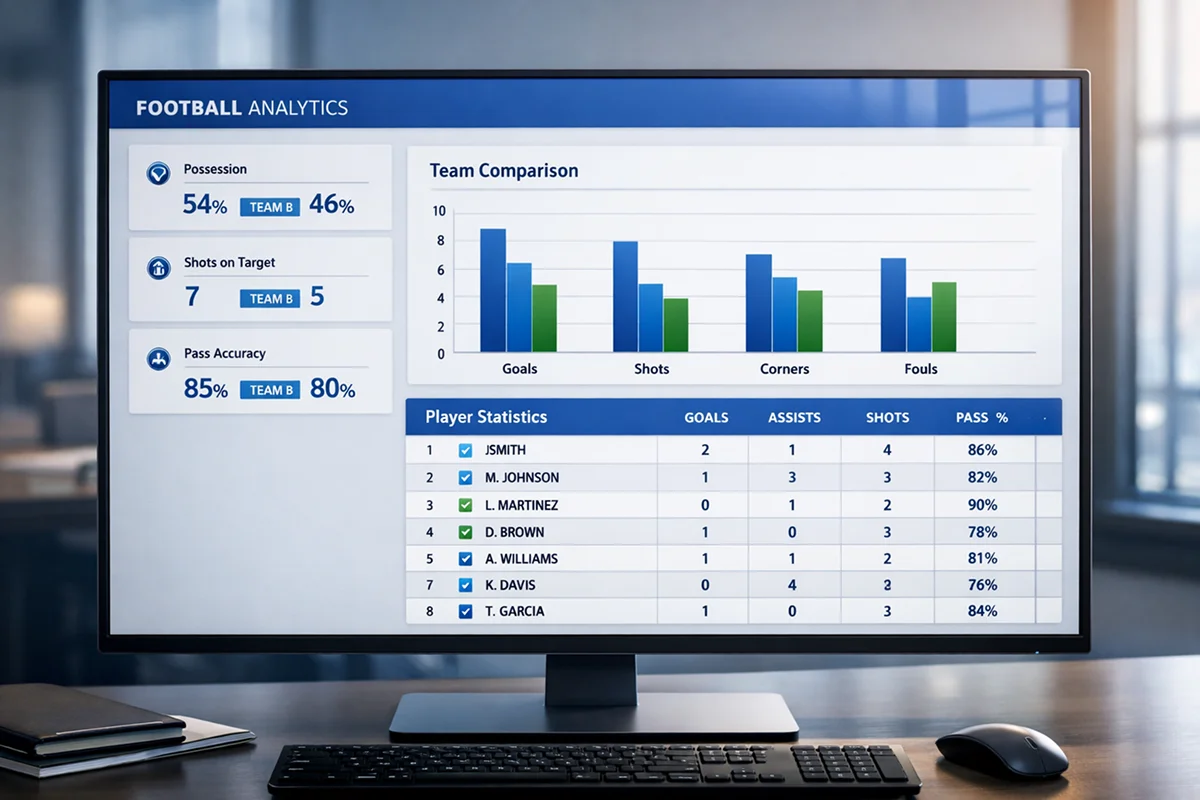
The foundation of modern odds compilation rests on statistical models that translate raw data into probability estimates. These models vary in sophistication, but most share certain core elements. Understanding what goes into them helps explain why odds look the way they do and where potential weaknesses might exist.
Team strength ratings form the starting point for most models. These ratings attempt to quantify how good each team is relative to others in the same competition. The simplest versions might look at recent results, weighting more recent matches more heavily than older ones. More sophisticated approaches incorporate goal difference, expected goals metrics, shot quality data, and adjustments for opponent strength. A team that beats strong opponents by narrow margins might rate higher than one that thrashes weak sides, even if the latter has accumulated more points.
Home advantage adjustment is another crucial input. Historically, playing at home conferred significant advantages across most football leagues, typically worth something like half a goal in expected outcome. This advantage has diminished in recent years, particularly since the pandemic-era matches played in empty stadiums, but it remains a meaningful factor. Models typically estimate home advantage differently for different leagues and sometimes for different teams within leagues, recognising that some clubs benefit more from their home environment than others.
Injury and suspension information feeds directly into probability estimates. The absence of a key player, particularly a prolific striker or commanding goalkeeper, materially affects a team’s expected performance. Models vary in how they incorporate this information. Some apply fixed adjustments based on player importance metrics. Others attempt more nuanced estimates of how specific absences affect particular matchups. The challenge lies in the timing of information, as team news often emerges late, requiring rapid recalculation close to kick-off.
Fixture context matters more than simple models sometimes acknowledge. Cup matches differ from league fixtures in intensity and importance. Derby games carry emotional weight that might produce unexpected outcomes. End-of-season dead rubbers can see dramatically different effort levels depending on what each team is playing for. The best models attempt to capture these contextual factors, though doing so accurately remains challenging.
Expected goals data has revolutionised how analysts assess team quality over the past decade. Rather than simply counting goals scored and conceded, expected goals models evaluate the quality of chances created and allowed. A team consistently generating high-quality opportunities while conceding only low-percentage shots is probably better than their actual goal difference suggests and might be underpriced by markets that focus too heavily on raw results. Bookmakers now routinely incorporate expected goals data into their models, though interpretations of exactly how to weight this information vary.
Weather conditions receive less attention than perhaps they should. Rain affects pitch conditions and can change how matches play out, particularly for teams that rely on quick passing combinations along the ground. Wind can make long balls unpredictable. Extreme heat saps energy and might favour teams with greater squad depth. Most models acknowledge weather as a factor but struggle to quantify its impact precisely.
The models themselves typically output probability distributions rather than single point estimates. For a match between two evenly-matched sides, a model might suggest 35 percent chance of a home win, 30 percent draw, and 35 percent away win. These probabilities then translate into fair odds, which represent what prices would look like in a market with no bookmaker margin. The actual published odds come from adjusting these fair prices to build in the profit margin that keeps the bookmaker in business.
Building the Margin Into Every Market
Bookmakers are businesses, and like all businesses, they need revenue to survive. That revenue comes primarily from the margin built into their odds, a concept so fundamental to understanding betting that no serious punter should place money without grasping it fully.
Consider a coin flip, the simplest possible betting market. The true probability of heads is 50 percent, and the true probability of tails is also 50 percent. Fair odds for each outcome would be 2.00 in decimal format. If a bookmaker offered these exact prices and took equal money on both sides, they would simply redistribute money between winning and losing bettors, earning nothing themselves.
In reality, a bookmaker might offer 1.90 on heads and 1.90 on tails. These odds imply that each outcome has about a 52.6 percent chance of occurring. Added together, the implied probabilities total 105.2 percent rather than 100 percent. That excess 5.2 percent represents the bookmaker’s margin, their theoretical profit baked into the prices regardless of which side of the coin lands face up.
Football betting works identically but with more complexity. A three-way match result market offers home win, draw, and away win. If a compiler’s model suggests true probabilities of 50 percent, 25 percent, and 25 percent respectively, fair odds would be 2.00, 4.00, and 4.00. With a 5 percent margin applied proportionally, those odds might become 1.90, 3.80, and 3.80, implying total probability of about 105 percent.
Margins vary significantly across bookmakers and markets. The most competitive operators run match result markets for major leagues at margins below 3 percent. Others, particularly those targeting casual recreational bettors, might operate at 6 percent or higher. For the same underlying probability estimates, these differences translate into meaningfully different prices. Over many bets, consistently accepting poor odds versus shopping for competitive prices costs punters substantial sums.
More exotic markets typically carry higher margins. Correct score betting, goalscorer markets, and especially accumulator-style combination bets often build in 10 percent margins or more. The reasoning is partly commercial, as casual bettors who gravitate toward these markets tend to be less price-sensitive, and partly practical, as thin markets attract less sophisticated modelling and greater uncertainty in probability estimates.
The margin also gets applied differently depending on market characteristics. Some bookmakers apply margins proportionally across all outcomes. Others shade more heavily against likely outcomes, reasoning that most bettors will back favourites regardless of price. Still others adjust based on their specific risk exposure, shortening odds where they have taken too much action and lengthening elsewhere to attract balancing money.
Understanding margins allows bettors to evaluate whether any given price offers genuine value. If you believe a team has a 50 percent chance of winning and the market offers odds implying only 45 percent probability, that represents potential value worth backing. But if the margin pushes your 50 percent estimate against odds implying 48 percent probability, the edge becomes marginal at best. Calculating implied probabilities from odds and comparing them to your own estimates is among the most valuable habits any bettor can develop.
To maximize your potential returns, it is crucial to understand how to read and calculate football betting odds before placing any wagers.
Market Forces and Line Movement

Published odds rarely stay static. From the moment a market opens until the final whistle blows, prices move in response to betting activity, new information, and adjustments in the compiler’s own views. Understanding why and how lines move provides insight into where the smart money flows and where opportunities might exist.
Opening lines represent the bookmaker’s initial assessment, typically published several days before a match for major leagues. These prices reflect the compiler’s model outputs plus margin adjustments, but they have not yet absorbed any signal from betting activity. Early prices can sometimes offer value precisely because they have not been stress-tested by the market. Alternatively, they might contain errors that sharper bettors will quickly exploit.
As betting money arrives, prices respond. Heavy action on one outcome causes those odds to shorten while odds on alternative outcomes lengthen. This dynamic serves the bookmaker’s interest in balancing exposure, ideally reaching a position where they profit regardless of result. The process is sometimes called price discovery, the market collectively settling on what it believes are accurate probabilities through the mechanism of betting activity.
Not all betting money carries equal weight in the eyes of bookmakers. Action from known sharp bettors, individuals or syndicates with track records of winning over time, triggers immediate attention and often significant line moves. These bettors have demonstrated an ability to identify mispriced markets, so their positions convey meaningful information about where true probability lies. When sharp money arrives, bookmakers respect it by adjusting prices, sometimes dramatically.
Recreational money moves markets more slowly if at all. Casual bettors backing their favourite team or chasing long odds on accumulators do not send the same signal. Bookmakers welcome this action as it represents their core profit source. The ideal scenario for a betting company involves taking sharp money that correctly prices the market while also attracting sufficient recreational volume at those corrected prices to ensure profitability.
Information-driven moves occur when news breaks that materially affects expected outcomes. A key player ruled out through injury, a managerial sacking, or disciplinary issues emerging can all trigger rapid repricing. Bookmakers monitor team news feeds continuously and respond within minutes to significant developments. Bettors who access information first, before prices adjust, can sometimes capture value that evaporates once the wider market learns the same news.
Steam moves describe sudden, coordinated action across multiple bookmakers, typically originating from betting syndicates that simultaneously attack mispriced lines wherever they appear. When steam hits, prices move sharply and quickly. Following steam moves, sometimes called following the smart money, has become a betting strategy in itself, though execution challenges make it difficult for individual punters to profit consistently.
Late money, arriving close to kick-off, often carries particular significance. This is when team news becomes certain, when any overnight developments have fully emerged, and when sharp bettors make their final assessments. Significant late movement in a direction suggests the market has received meaningful new information. Of course, sometimes late moves simply reflect recreational bettors placing last-minute hunches, so interpretation requires context and judgement.
Sharp Bettors Versus the Public

The distinction between sharp and recreational bettors fundamentally shapes how bookmakers operate. Understanding this distinction clarifies why certain accounts get limited, why odds move in particular ways, and what signals the market actually sends through price discovery.
Sharp bettors approach betting as a professional or semi-professional pursuit. They maintain detailed records, calculate expected value rigorously, and bet only when their analysis identifies genuine edges. Over large sample sizes, they win. This winning does not come from luck or intuition but from systematic exploitation of mispriced markets. Sharps might specialise in particular leagues where they possess informational advantages, or they might rely on sophisticated models that outperform those used by bookmakers in certain contexts.
Recreational bettors, by contrast, bet for entertainment. They might follow favourite teams regardless of odds, chase accumulators for the excitement of potential big wins, or bet on matches simply because they are watching and want added engagement. Over time, the margin built into odds ensures these bettors lose. They are, in industry terminology, negative expected value players, and their aggregate losses fund bookmaker profits.
Bookmakers absolutely need recreational volume. Without it, their business model collapses. But they need to manage sharp action carefully to avoid giving away value that erodes margins. The standard response is account restriction. Bettors whose patterns suggest sharp behaviour, consistent small edges, methodical staking, focus on soft markets, receive limits that prevent them from betting meaningful amounts. Some get closed entirely.
This dynamic creates a somewhat adversarial relationship. Sharps view bookmakers as opponents to be beaten. Bookmakers view sharps as threats to be neutralised. Meanwhile, recreational bettors exist somewhat obliviously in between, their losses financing the entire ecosystem. If you bet long enough and successfully enough, expect restrictions. It is not personal; it is simply bookmakers protecting their edge.
The market as a whole reflects the balance between these forces. Early prices might be soft, offering value to sharps who pounce quickly. As sharp money moves lines, prices become more accurate. By kick-off, after absorbing all available information and betting activity, closing lines typically represent the most accurate probability estimates the market can produce. Studies consistently show that closing lines predict match outcomes better than opening lines, demonstrating that the price discovery process genuinely improves accuracy.
For individual bettors, the practical implication is clear. Beating closing line value, getting better odds than where the market eventually settles, correlates strongly with long-term profitability. If you consistently bet at prices that look worse than closing lines, you are probably losing edge. Tracking your own closing line value provides a useful diagnostic for whether your betting strategy actually identifies mispriced markets or simply rides variance.
Using This Knowledge Practically

Understanding how bookmakers set odds is only valuable if it changes how you actually bet. Abstract knowledge without practical application remains merely interesting rather than useful. Here is how to translate these insights into better betting behaviour.
First, shop for odds aggressively. Different bookmakers apply different margins, use different models, and respond to information differently. The same underlying event might carry odds of 2.10 at one operator and 1.95 at another. Over time, consistently taking the best available price rather than settling for whatever your default bookmaker offers compounds into significant return differences. Maintain accounts at multiple bookmakers and check prices before placing any meaningful bet.
Second, calculate implied probabilities habitually. Convert odds into percentages and compare them to your own assessments. If you believe a team has a 40 percent chance of winning and the odds imply only 35 percent, you have identified potential value. If your estimate aligns closely with implied probability, the bet offers no edge and probably should not be placed. This discipline prevents emotional betting and forces genuine analysis before committing money.
Third, pay attention to line movement but interpret it carefully. Not all moves carry equal significance. Sharp-driven corrections to opening prices convey real information about probability estimates. Late steam moves might signal valuable insights. Random recreational fluctuation means little. Developing intuition for which moves matter requires observation over time and ideally some record-keeping about which signals actually predict outcomes.
Fourth, recognise market efficiency in popular markets. Major league match results for teams like Manchester City, Liverpool, or Barcelona receive enormous betting volume and intense analytical attention. Prices in these markets typically reflect accurate probabilities by kick-off, leaving little room for casual bettors to find consistent edges. Opportunities, if they exist, often lie in less liquid markets where bookmaker models are weaker and pricing errors more likely.
Fifth, respect the margin when assessing profitability. Breaking even against true odds means losing after margin. To actually profit, you need to identify value greater than the margin baked into prices. For a market running at 5 percent margin, your edge needs to exceed 5 percent just to reach profitability. This sobering reality explains why most bettors lose over time, edges of that magnitude are genuinely difficult to find and maintain consistently.
The ultimate lesson from understanding odds compilation is humility. Bookmakers employ skilled professionals armed with sophisticated tools specifically to ensure they win. Beating them requires either genuine informational advantage, superior analytical capability, or identification of markets where their models underperform. None of these are easy. Approaching betting with realistic expectations, enjoying the entertainment while accepting that consistent profits elude most participants, produces healthier engagement than chasing edges that probably do not exist.
Knowledge of how the machinery works does not change who usually wins. It simply helps you lose less, recognise genuine opportunities when they appear, and avoid the worst mistakes that transform betting from enjoyable hobby into expensive regret. You can always find the most competitive lines and comprehensive reviews on our top football betting platform.
